Starting Solids Without Losing the Plot: A No-Fuss Guide for First-Time Mums
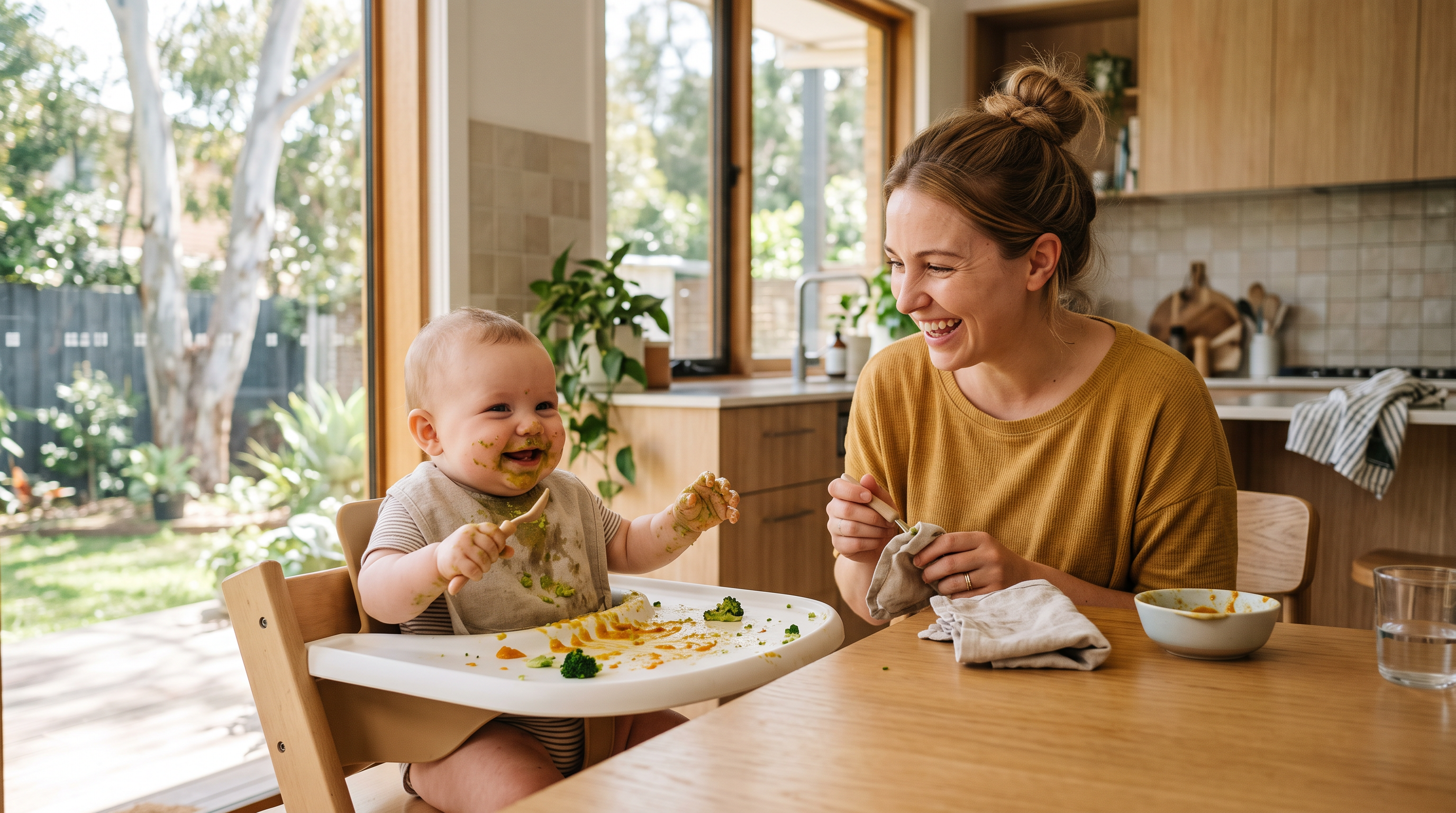
Starting solids sounds adorable in theory. Your baby sits sweetly in their highchair, delicately sampling avocado while you capture the milestone for Instagram.
In reality, the avocado is in their eyebrow, the spoon is on the floor and they’re licking the highchair strap like it’s a Michelin-starred entrée.
Welcome to solids!
When is your baby ready?
Most babies are ready at around six months—but readiness matters more than flipping the calendar to a particular date.
Look for signs that your baby can:
- Hold their head and neck steady
- Sit upright with support
- Reach for food or watch you eat with intense suspicion
- Open their mouth when food is offered
- Swallow food rather than immediately pushing everything out with their tongue
If you’re unsure, have a chat with your Plunket nurse, child health nurse, GP or another qualified health professional. Babies born prematurely may also follow a different timeline.
What should you feed them first?
There’s no official rule saying your baby must begin with organic pumpkin purée lovingly prepared beneath a full moon.
Soft, iron-rich foods are particularly important from around six months. Try:
- Iron-fortified baby cereal
- Well-cooked egg
- Soft shredded or minced meat
- Mashed beans, lentils or chickpeas
- Tofu
- Flaked fish with all bones carefully removed
You can add soft fruit, cooked vegetables, full-fat plain yoghurt, avocado and porridge too. Start with a teaspoon or two and let your baby decide how much they want.
Some days they’ll eat enthusiastically. Other days they’ll stare directly into your soul while dropping every morsel onto the floor. Both are normal.
Purées or baby-led weaning?
Good news: there’s no parenting trophy for choosing the “correct” method.
You can spoon-feed smooth or mashed food, offer soft finger foods, or combine the two. The best method is whichever works safely for your baby and doesn’t make every meal feel like a competitive sport.
If offering finger food, make it soft enough to squash easily between your fingers. Progress through different textures as your baby’s skills develop rather than remaining on silky purées forever.
And yes, playing with food is part of learning. Unfortunately, your walls have been selected to participate.
Milk is still the main event
When solids begin, breast milk or infant formula remains your baby’s main source of nutrition. At first, food is largely about learning—not demolishing three balanced meals and requesting the dessert menu.
Offer solids when your baby is alert and relaxed rather than ravenously hungry or minutes away from a nap-fuelled meltdown. After a milk feed can work well in the early days.
In New Zealand, cow’s milk isn’t recommended as a main drink before 12 months, although small amounts can be used in food. The guidance is similar in Australia.
What about allergens?
Common allergenic foods—including well-cooked egg, smooth peanut butter, dairy, wheat, soy, fish and shellfish—can generally be introduced from around six months.
Introduce them one at a time, in a baby-safe form and preferably earlier in the day. Once an allergenic food has been eaten without a reaction, keep offering it regularly.
Whole nuts are a choking hazard, so peanut or nut butter should be smooth and thinned or spread lightly—not delivered in a giant sticky blob.
If your baby has severe eczema, an existing food allergy or has reacted to food before, get individual advice from a health professional first. Seek urgent help if your baby develops breathing difficulties or swelling of the tongue or throat.
Gagging and choking are not the same
Gagging can be noisy, dramatic and capable of ageing a parent approximately seven years. It’s a normal reflex that helps babies learn how to move food around their mouths.
Choking may be quiet because the airway is blocked. Always supervise your baby while they eat, sit them upright and keep choking hazards away. A baby first-aid course is well worth doing—not because something will go wrong, but because knowing what to do can make starting solids much less nerve-racking.
Foods to leave off the menu
Babies don’t need:
- Honey before 12 months
- Whole nuts, popcorn or other hard choking hazards
- Raw or runny eggs
- Lots of added salt or sugar
- Unpasteurised dairy products
- Cow’s milk as their main drink before 12 months
Also, grapes, cherry tomatoes and similar round foods need to be prepared safely rather than served whole.
Embrace the mess
You don’t need a cupboard full of specialised equipment. A safe highchair, a couple of spoons, an open cup and a good bib will cover most situations.
A washable messy mat is also handy unless you enjoy scraping dried porridge from the floor while wondering where your life took this turn.
Remember, your job is to offer suitable food. Your baby’s job is to decide whether to eat it, squash it, wear it or offer it ceremoniously to the dog.
Keep meals relaxed, follow their hunger and fullness cues, and don’t panic if progress feels slow. Starting solids isn’t a test of your cooking, your parenting or your ability to make broccoli exciting.
It’s simply your baby learning a brand-new skill—one spectacularly messy mouthful at a time.