Postpartum Night Sweats: Because Apparently Childbirth Wasn’t Damp Enough
You’ve survived pregnancy, given birth, and finally managed to get your baby settled for what might—if the stars align—be a whole 47 minutes of sleep.
Then you wake up absolutely drenched.
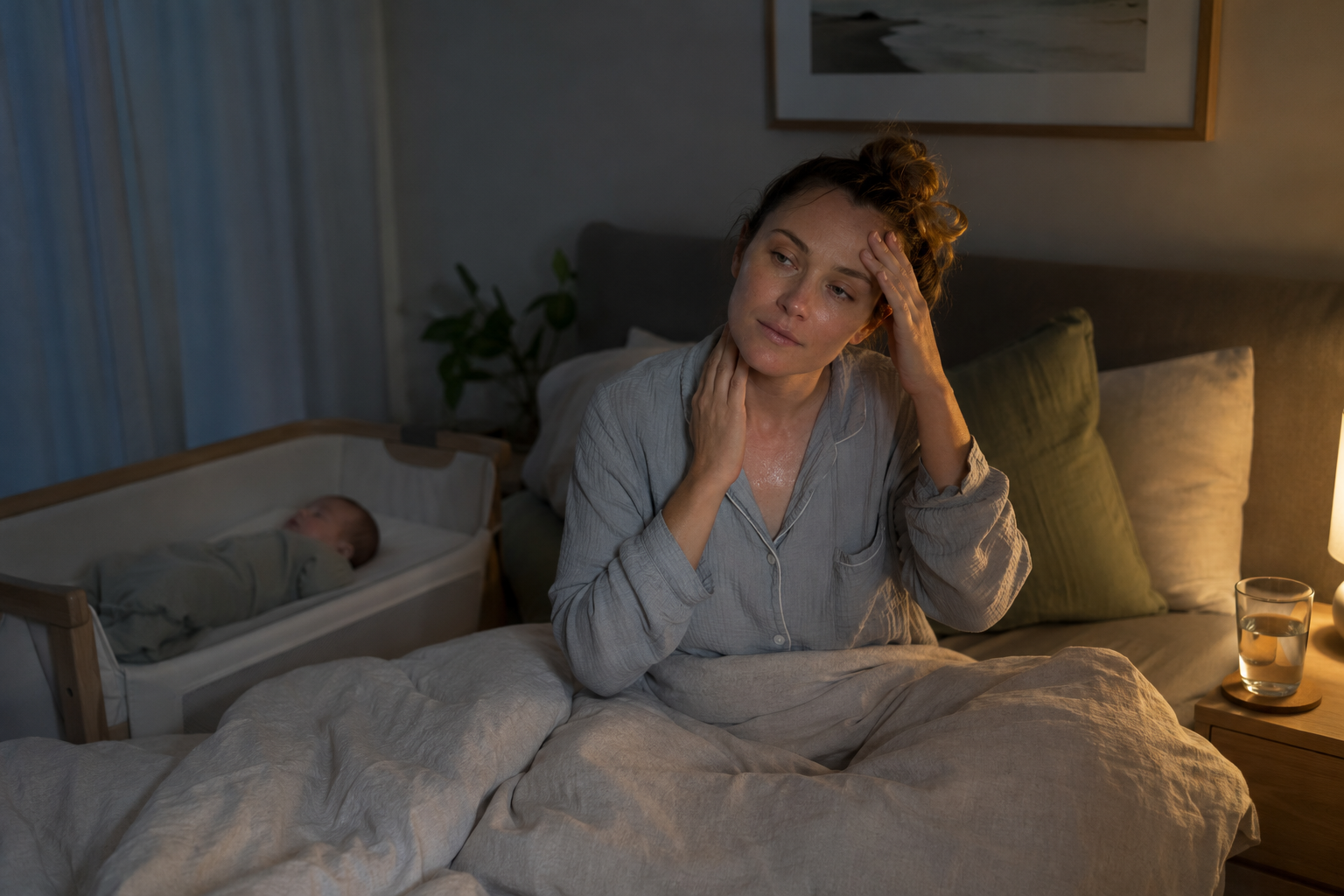
Your pyjamas are wet. Your hair is stuck to your neck. The sheets feel suspiciously swamp-like. For one confusing moment, you may genuinely wonder whether your waters have broken again.
Welcome to postpartum night sweats: yet another charming part of having a baby that nobody thought to mention until you were already sleeping on a towel.
The good news is that sweating heavily after birth is usually completely normal. The less-good news is that your body may temporarily behave like it has been placed inside a sauna run by a slightly overenthusiastic intern.
Why Am I Sweating Like I’ve Run a Marathon in My Sleep?
As with approximately 94 per cent of strange things that happen during pregnancy and postpartum recovery, hormones are largely to blame.
During pregnancy, your levels of oestrogen and progesterone rise dramatically. After birth, those levels drop quickly. This sudden shift can confuse the hypothalamus—the part of your brain responsible for regulating body temperature.
In other words, your internal thermostat briefly loses the plot and decides you are far too hot, even when you are absolutely not. It responds by switching on every sweat gland you own, including a few you were previously unaware existed.
Your body is also busy getting rid of extra fluid from pregnancy. Some of this leaves via frequent trips to the toilet, and some exits in a slightly more dramatic fashion—namely, through your skin at 2am.
So yes, there is a real biological reason you’re waking up looking like you’ve been lightly pressure-washed overnight. Your body is adjusting hormones, shedding fluid, and gradually returning to its pre-pregnancy settings.
Very efficient. Very soggy.
How Sweaty Are We Talking?
Postpartum night sweats can range from “slightly warm and mildly annoying” to “I need new pyjamas, new sheets, and possibly a mop.”
You might wake up with a damp chest, back, neck, or hair. You may feel hot one moment and chilly the next as the sweat cools. You might also notice stronger body odour, which feels especially unfair when showering already requires military-level planning involving a baby monitor and perfect timing.
Sweating can also happen during the day, but it’s often more noticeable at night when you’re under bedding, feeding a baby, or waking frequently anyway. It’s much harder to ignore when your pyjama top has fused itself to you like cling film.
None of this means you’re unclean, unfit, or doing anything wrong. Your body is simply doing some very damp post-birth recalibration.
How Long Do Postpartum Night Sweats Last?
They’re often at their worst in the first couple of weeks after birth and usually improve as hormone levels stabilise. For many people, they settle within a few weeks.
However, every body works on its own timeline. If you’re breastfeeding, lower oestrogen levels can sometimes mean sweating sticks around a bit longer. This is still usually normal and just part of hormonal adjustment.
If sweating continues beyond several weeks, worsens instead of improving, or returns after stopping, it’s worth checking in with your midwife, GP, or healthcare provider. Occasionally, persistent sweating can be linked to things like infection, thyroid changes, or medication side effects, so it’s always worth mentioning.
How to Make the Night-Time Swamp More Bearable
You probably can’t turn the sweating off completely, but you can make it less miserable.
Try loose, breathable cotton pyjamas and lightweight bedding that can be easily changed. Natural fabrics tend to be more comfortable when your body is temporarily acting like a broken radiator.
Keep a spare set of pyjamas by the bed so you’re not rummaging through drawers at 3am while holding a newborn. A towel on top of the sheet can also save you from changing the entire bed in the middle of the night—because wrestling a fitted sheet while sleep-deprived is a special kind of chaos.
A fan or cooler room may help, but make sure your baby’s sleep space stays at a safe temperature and that airflow isn’t directed at them.
Keep water nearby and drink when you’re thirsty. You’re losing fluid through sweat, and breastfeeding can increase thirst too. There’s no need for extreme hydration strategies—your body is already running its own very enthusiastic (and slightly sweaty) system.
A quick shower can help you feel human again, but if that’s not happening, a cool flannel and clean top absolutely still count as a win.
Is It Normal to Smell Different Too?
Annoyingly, yes.
Hormonal changes and increased sweating can make your natural body odour stronger after birth. You may find yourself wondering if something in the room has gone off, only to realise it is, in fact, you.
There is some evidence that changes in scent after birth may play a role in bonding and helping newborns recognise their mother, although the science is still developing. Either way, your baby is not judging you. They have recently produced bodily fluids in every direction and consider this normal behaviour.
Use deodorant if you like, wear breathable clothing, and shower when possible—but please don’t feel embarrassed. Your body has just grown and delivered a human being. A bit of recalibration (and smell) is expected.
When Night Sweats May Need Medical Attention
Normal postpartum night sweats are annoying but shouldn’t make you feel seriously unwell.
Contact your midwife, GP, or healthcare provider if sweating comes with a fever of 38°C or higher, strong chills or shivering, worsening abdominal or pelvic pain, foul-smelling vaginal discharge, increased bleeding, pain when passing urine, or a wound (caesarean or perineal) that is red, swollen, painful, or oozing. These can be signs of infection.
A hot, painful, or red area on the breast—especially with fever, chills, or flu-like symptoms—may indicate mastitis and should also be checked.
Seek urgent help if you experience chest pain, shortness of breath, fainting, confusion, a racing heart, or feel suddenly very unwell. Trust your instincts—if something feels wrong, it’s always okay to get checked.
Postpartum recovery is full of weird symptoms, but you are never expected to figure them out alone.
One More Glamorous Chapter of Postpartum Life
Postpartum night sweats can be uncomfortable, surprising, and wildly inconvenient—especially when you’re already dealing with broken sleep, feeding schedules, bleeding, and a baby who thinks 2am is party time.
But in most cases, they’re simply a temporary sign that your hormones and fluid levels are adjusting after pregnancy.
Keep water nearby, spare pyjamas within reach, and a towel on standby. Give your body time—it’s doing a lot of behind-the-scenes work, even if it currently looks like it’s auditioning for a sauna advert.
You made a whole baby. If your body needs a few weeks of dramatic sweating about it, that’s honestly fair enough.
This blog provides general information and is not a substitute for individual medical advice. Contact your midwife, GP, or another qualified healthcare professional if you are worried about any symptoms after birth.