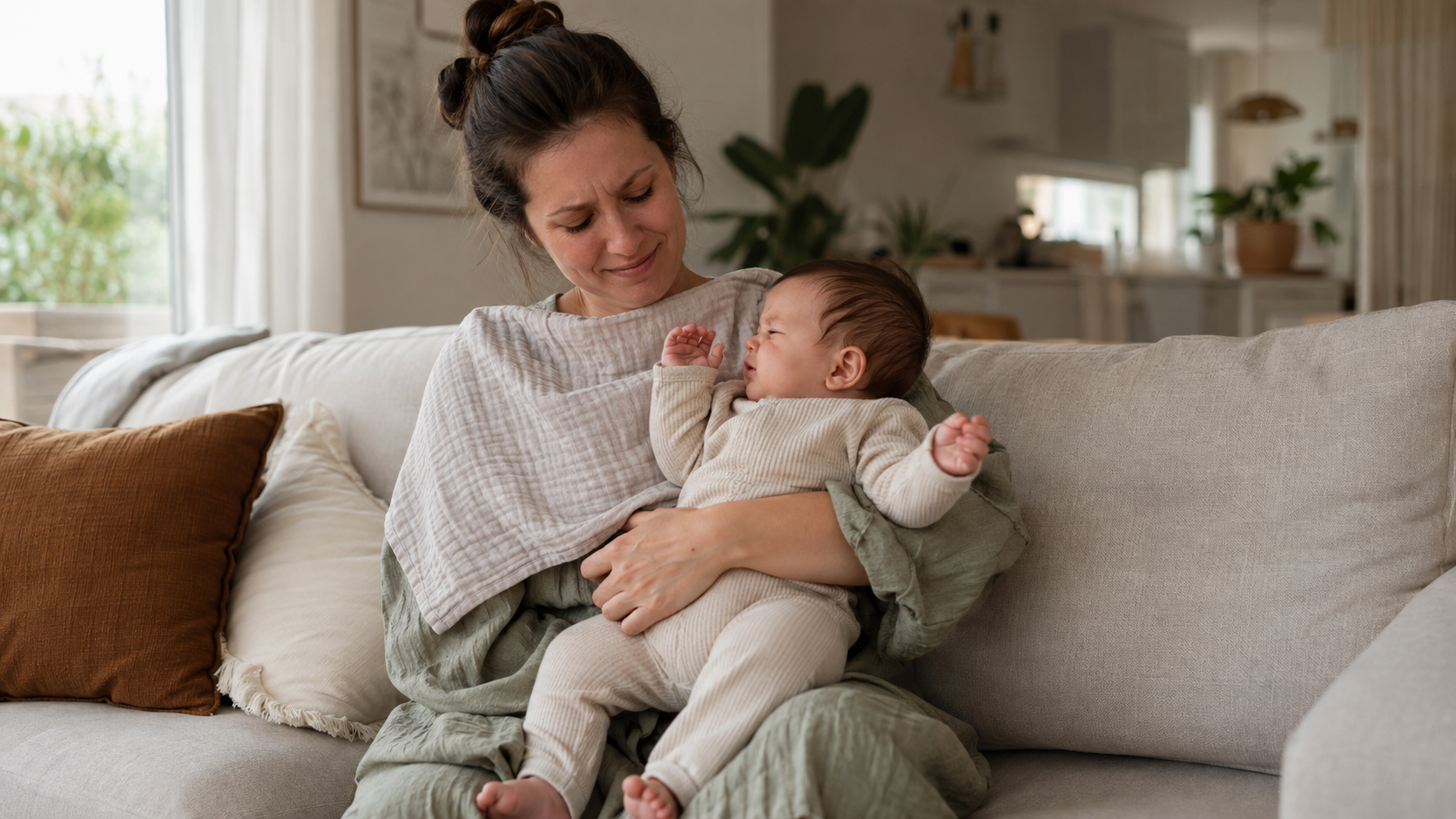
Postpartum Hair Loss: Because Apparently You Didn’t Have Enough to Deal With
You’ve grown a human, given birth, survived the newborn nights and become intimately familiar with fluids you did not know the human body could produce.
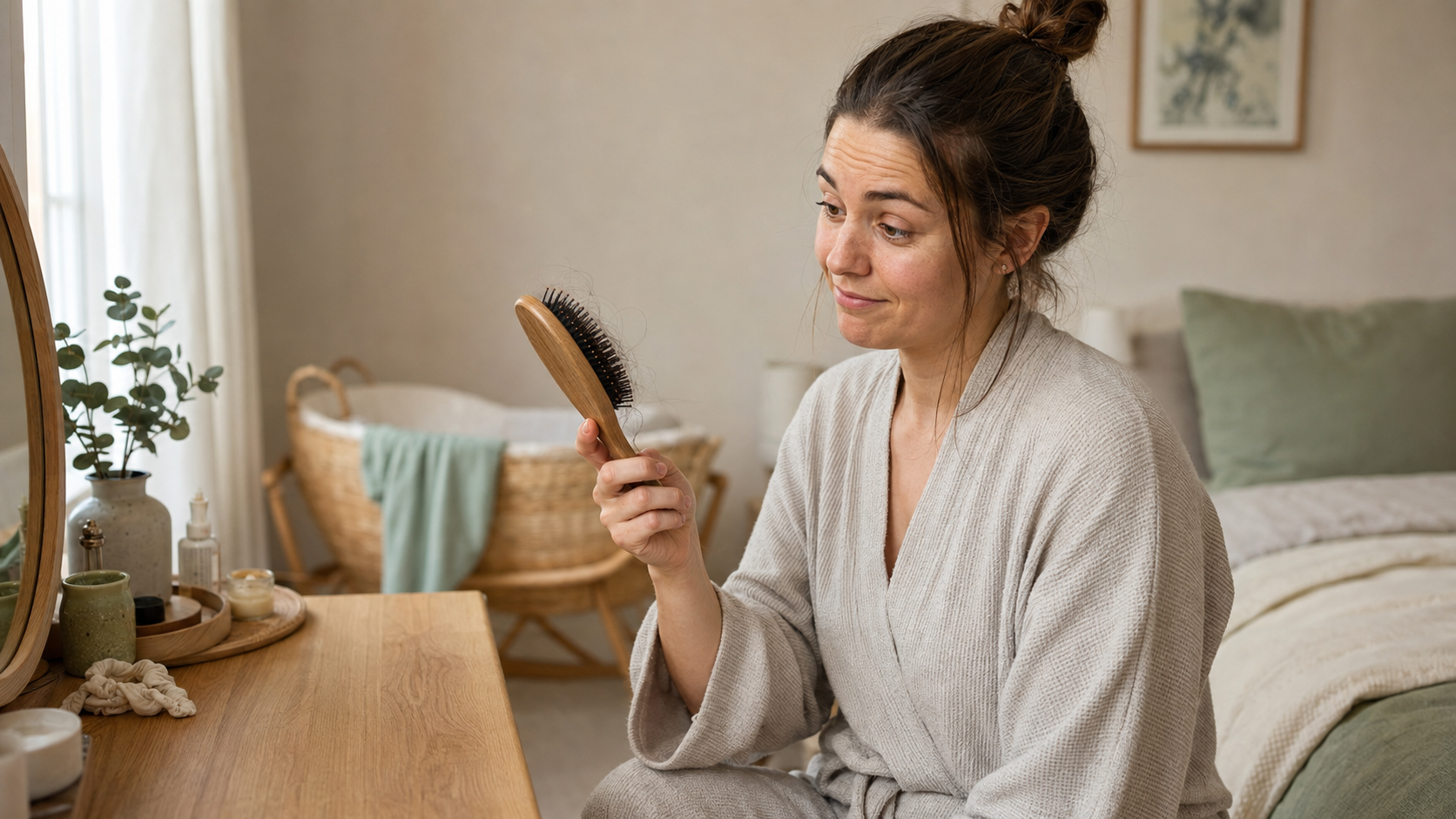
Just when you’re beginning to think you might have this whole motherhood thing under control, you wash your hair and discover what appears to be a small woodland creature circling the shower drain.
Then you brush it.
More hair.
Then you notice strands on your pillow, your clothes, the sofa and somehow wrapped around your baby’s tiny fingers. At this point, you may be wondering whether motherhood is slowly turning you into a bald eagle.
Welcome to postpartum hair loss. Yet another delightful surprise nobody thought to mention at the baby shower.
Why is my hair suddenly abandoning me?
During pregnancy, increased hormone levels keep more of your hair in its growing phase. This is why many pregnant women enjoy thicker, fuller hair and briefly believe they have unlocked some kind of prenatal beauty secret.
Unfortunately, it is less of a permanent glow up and more of a hormonal loan.
After your baby arrives, those hormone levels drop. All the extra hairs that stayed put during pregnancy eventually enter their resting and shedding phases together.
They are not politely taking turns, either. They are leaving as a group, like someone announced free cocktails at the next venue.
The medical name for this type of shedding is telogen effluvium. It sounds dramatic, but postpartum shedding is very common and is usually temporary.
You are not necessarily losing more hair overall than you would have. Much of it is hair that would normally have fallen out gradually during pregnancy. Your body simply saved it up and delivered it all at once, because apparently giving birth was not enough of a delivery.
When does postpartum hair loss start?
Postpartum hair loss often becomes noticeable around two to four months after giving birth.
This timing can feel particularly rude. By then, the congratulatory meals have stopped arriving, your baby has discovered contact naps and everyone assumes you must have settled into a lovely little routine.
Meanwhile, you are standing in the bathroom at 11 pm, holding a fistful of hair and quietly asking, “Is this normal?”
For most mums, the shedding gradually slows down. Hair growth usually returns towards its usual pattern within six to twelve months after birth, although everyone’s timeline is different.
It can feel alarming while it is happening, especially around the temples and hairline where thinning may be more obvious. The good news is that postpartum shedding does not usually damage the hair follicles. New hair should begin growing in its place.
That brings us to the next exciting chapter.
Postpartum baby hairs.
Short, fluffy regrowth that sticks straight up around your hairline and refuses to cooperate with any hairstyle known to humankind. You wanted curtain bangs? Too bad. Your hormones have chosen startled cockatoo.
Can you stop postpartum hair loss?
Sadly, there is no magical shampoo, supplement or expensive serum that can completely prevent normal postpartum shedding.
If someone on social media promises that one gummy vitamin will restore your pregnancy hair, improve your sleep, balance your hormones and reorganise the nappy drawer, approach with caution.
Postpartum hair loss is driven largely by normal hormonal changes. You cannot convince those resting hairs to stay by giving them a stern talking to.
You can, however, treat the hair you still have gently while you wait for things to settle.
Use a wide toothed comb and avoid aggressively dragging a brush through wet hair. Try not to wear very tight ponytails or buns every day, especially if they pull around your temples. Reducing excessive heat styling, bleaching and harsh chemical treatments may also help prevent extra breakage.
A volumising shampoo or a shorter haircut can make thinning hair feel fuller, but neither is compulsory. You are also perfectly entitled to put your hair in a loose mum bun and deal with it sometime next year.
Does food make a difference?
Your body needs adequate nutrition to support normal hair growth, but there is no single miracle food that will switch off postpartum shedding overnight.
Aim for regular meals containing protein, vegetables, fruit, wholegrains and healthy fats. This sounds simple until you remember that caring for a baby can make eating an entire piece of toast feel like an ambitious personal goal.
Keep easy foods nearby and accept help when it is offered. Yoghurt, eggs, nuts, fruit, sandwiches and leftovers you can eat with one hand all count. This is not the season for producing a beautifully arranged wellness bowl while your baby screams because you dared to sit down.
Low iron levels, thyroid conditions, significant weight loss and nutritional deficiencies can also contribute to hair loss. Do not start taking large amounts of vitamins or minerals without speaking to your GP, midwife or another qualified health professional. More is not always better, particularly when it comes to supplements.
When should you talk to your GP?
Normal postpartum hair loss is usually spread across the scalp rather than appearing as completely bald patches.
It is worth speaking with your GP if you notice smooth or distinct bald patches, scalp redness, pain, itching or scaling. You should also check in if the shedding is extremely heavy, continues beyond your baby’s first birthday or is not showing any signs of slowing down.
Make an appointment if your hair loss comes with other symptoms such as unusual exhaustion, dizziness, feeling very cold, heart palpitations or unexplained weight changes. Yes, tiredness is practically the official uniform of new motherhood, but you still deserve to have persistent or worrying symptoms taken seriously.
Your GP may suggest checking things such as your iron levels or thyroid function, depending on your symptoms and health history.
You are not doing anything wrong
Hair can feel closely tied to how we see ourselves, so being upset by postpartum hair loss does not make you vain.
Your body already feels different. Your days revolve around someone else’s feeding, sleeping and pooing schedule. Finding clumps of hair in the shower can feel like one more piece of your old self disappearing.
But this stage is usually temporary.
Your hair is adjusting after pregnancy, just as the rest of your body is. It does not mean you are unhealthy, failing at recovery or destined to wear a hat forever.
For now, clear the shower drain, embrace the fluffy regrowth and remember that your body has recently done something enormous.
It grew an entire person.
Losing a few handfuls of hair afterwards is wildly inconvenient, deeply unfair and completely on brand for postpartum life.